




A dosing pump for water treatment is rarely the biggest item in the system, but it is often the one that decides whether the whole process stays stable. Get the dose rate wrong, choose the wrong wetted materials, or ignore back pressure, and the result is usually poor water quality, wasted chemical, or equipment trouble that keeps coming back.
For Australian operators, installers and maintenance teams, the challenge is not finding a pump called a dosing pump. It is matching the pump to the chemical, the duty, the control method and the site conditions. That applies whether you are chlorinating tank water, adjusting pH in a plant room, feeding coagulant in a treatment skid, or metering additives into an industrial process line.
What a dosing pump for water treatment actually does
At its simplest, a dosing pump injects a precise amount of chemical into a water stream. That sounds straightforward, but precision is the whole point. Water treatment relies on controlled chemical addition, and small errors can have a big effect on disinfection performance, corrosion control, scaling, odour, algae growth, or compliance targets.
Most water treatment dosing applications involve chemicals such as sodium hypochlorite, hydrochloric acid, caustic, alum, polymers, hydrogen peroxide or pH correction agents. Each of those has its own handling issues. Some are corrosive, some gas off, some are viscous, and some become unstable if the pump is poorly matched to the duty.
That is why pump selection should start with the application, not just the flow rate on the box. Two pumps with the same nominal output may behave very differently once they are installed on a real system.
The main pump types used in water treatment
The most common options are diaphragm dosing pumps and peristaltic dosing pumps. Both can work well, but they suit different conditions.
Diaphragm dosing pumps
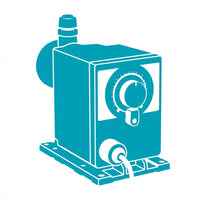
Diaphragm pumps are widely used because they offer accurate metering, good chemical resistance and reliable performance across a broad range of treatment jobs. They are a strong fit where consistent output matters and the chemical is relatively clean and free-flowing. Many systems use either solenoid-driven or motor-driven diaphragm pumps, depending on the required capacity and control.
For chlorination, pH correction and general chemical injection, a diaphragm pump is often the starting point. The trade-off is that suction conditions, line layout and back pressure matter. If the installation is poor, even a quality pump can lose accuracy or struggle with priming.
Peristaltic dosing pumps
Peristaltic pumps move fluid by compressing a tube, which means the chemical only contacts the tube itself. That can be a major advantage with aggressive, dirty or viscous products. They are often chosen for polymers, slurries or chemicals that would create valve issues in a conventional metering pump.
The trade-off is tube wear. Tube life becomes a maintenance item, and that needs to be factored into operating cost and service planning. In some jobs that is completely acceptable. In others, especially where long unattended run time is a priority, a diaphragm pump may be the better fit.
How to choose the right dosing pump for water treatment
A good selection process starts with the real operating conditions, not the best-case scenario.
Start with the chemical
The first question is what you are dosing. Chemical compatibility affects the diaphragm, tube, seals, valve seats, pump head and fittings. Sodium hypochlorite, for example, is common in water treatment but can be unforgiving if materials are poorly chosen. Acids and alkalis bring their own compatibility issues, and some chemicals off-gas or crystallise, which changes how the suction and injection side should be set up.
If the chemical supplier specifies compatibility requirements, follow them. If the site has had repeated failures, the cause is often not the pump brand but the wrong material selection for the product being dosed.
Confirm the required flow rate and pressure
Dosing pumps are selected by output and pressure, but both figures need context. Required dose rate should be based on the actual chemical demand, concentration and system flow. It is also worth allowing a margin so the pump is not permanently running at its limit.
Discharge pressure is just as important. The pump has to overcome line pressure, injection point pressure, and any losses through valves, fittings and accessories. A pump sized only on litres per hour can look right on paper and still fail in service because it cannot reliably dose against the real system pressure.
Look at control and adjustment
Some applications only need manual adjustment. Others need the pump to respond to a water meter, level switch, analyser or PLC signal. If the treatment process varies through the day, proper control can improve chemical efficiency and water quality.
There is no point buying a feature-rich unit if the site only needs simple fixed-rate dosing. Equally, a basic manual pump can become a limitation on systems that need proportional control or tighter process management.
Check suction conditions and installation layout
This part gets overlooked more often than it should. Long suction lines, poor foot valve placement, air leaks, chemical drum position and excessive lift can all affect pump performance. Some chemicals are far easier to handle when the pump is mounted for flooded suction rather than lifting from below.
Accessories matter as well. Depending on the application, you may need a foot valve, injection valve, pulsation dampener, calibration column, back pressure valve or degassing arrangement. These are not optional extras when the process depends on stable dosing.
Common mistakes when selecting a dosing pump
One of the most common mistakes is oversimplifying the duty. Buyers sometimes focus on headline output and assume dosing is a low-risk part of the system. In practice, inaccurate chemical feed can create bigger problems than a pump that simply stops.
Another common issue is using a pump at the extreme low end of its adjustment range. Metering pumps generally perform better when they operate in a practical mid-range rather than being heavily turned down all the time. If very low output is needed, it is usually better to size for that properly rather than forcing a larger pump to do it.
Maintenance access is another factor. If the pump is installed where no one can safely inspect valves, tubing or chemical connections, routine service tends to get delayed. That often leads to blocked lines, dosing drift or premature wear.
Where performance matters most
In residential and light commercial jobs, dosing often supports pool water balance, tank water disinfection or small-scale treatment systems. Here, ease of setup and dependable operation usually matter more than advanced automation.
In commercial, agricultural and industrial settings, the demands are broader. A dosing pump may be part of a bore water treatment train, a cooling water system, a washdown process, wastewater neutralisation, or a packaged treatment skid. Those applications usually require closer attention to dosing accuracy, service intervals and compatibility with control systems.
Australian conditions also add their own pressures. Heat, dust, remote locations and inconsistent maintenance access can all influence what will actually work on site. A pump that performs well in a clean plant room may not be the best option for a harsh outdoor installation on a farm or in a regional facility.
Why support matters as much as the pump itself
A dosing pump is not just a catalogue item. It is part of a working system. When problems occur, they are often tied to calibration, chemical changes, worn consumables, blocked injection points or installation layout rather than a basic product fault.
That is where specialist advice makes a real difference. A supplier that understands pumps, treatment duties and after-sales support can help avoid the usual selection errors before they become downtime. For buyers comparing brands, that practical backup is often worth more than chasing the lowest upfront price.
Foundation Pumps works with customers across domestic, trade and industrial applications where getting the right equipment first time matters. In dosing, that usually means asking a few more questions early so the system stays reliable later.
Dosing pump for water treatment: getting the fit right
There is no single best dosing pump for water treatment in every application. The right choice depends on the chemical, the required output, the operating pressure, the control method and the site conditions. A diaphragm pump may be ideal for one job, while a peristaltic unit is clearly the better option for another.
If you treat dosing as a precise application rather than a generic pump purchase, you usually end up with better water quality, lower chemical waste and fewer service issues. That is the difference between a pump that technically runs and one that actually suits the job. When the water treatment process matters, that distinction is worth getting right from the start.