




Choosing a pump by price, brand name or what happens to be in stock is usually where problems start. If you want to know how to choose the right pump, the real job is matching the pump to the application, the liquid, the site conditions and the level of reliability you actually need.
A pump that is too small will struggle, cycle poorly or fail to deliver enough flow or pressure. A pump that is too large can waste power, wear components faster and create system issues that are just as frustrating. The right choice sits in the middle - sized for the job, suitable for the liquid, and practical to install and maintain.
How to choose the right pump for your application
The first question is not which brand to buy. It is what the pump needs to do. That sounds obvious, but many pump selection issues come from starting with the product instead of the duty.
If you are moving clean water from a tank to a house, the requirements are very different from draining a pit, dosing chemicals, pressurising a commercial building or lifting bore water over long distances. A pool pump, a sump pump and a pressure pump may all move water, but they are built for different jobs and operating conditions.
Start by defining the application in plain terms. Are you transferring water, boosting pressure, dewatering, irrigating, circulating, dosing or pumping wastewater? Is it for domestic use, agriculture, commercial services or industrial process work? Once that is clear, the field narrows quickly.
Match the pump type to the job
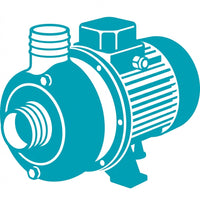
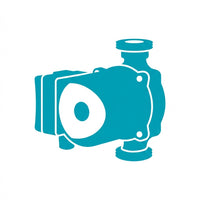
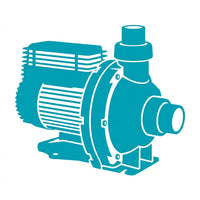
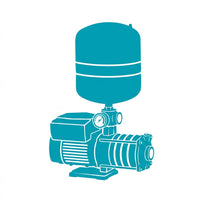
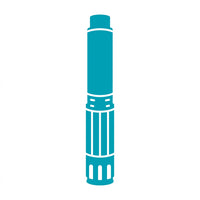
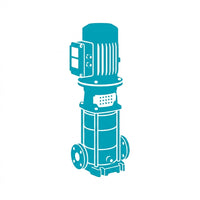
Pump type matters because each design has strengths and limits. Centrifugal pumps are common for water transfer and general duties where steady flow is needed. Pressure pumps are used where consistent water pressure matters, such as homes, amenities blocks and light commercial systems. Bore pumps are designed for submerged use in wells and bores, often where higher heads are involved.
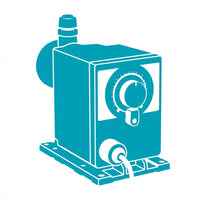
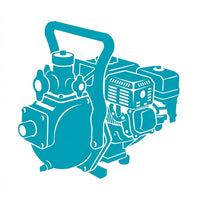
Sump pumps are better suited to drainage and groundwater removal. Pool pumps are built for circulation and filtration systems, not general transfer duties. Dosing pumps are designed for controlled chemical injection, where accuracy matters more than bulk flow. Firefighting pumps have their own performance and compliance requirements and should never be selected casually.
This is where people can come unstuck. A pump may appear close enough on paper, but if it is the wrong style for the application, service life and performance usually suffer.
Flow and pressure are the numbers that matter most
When people ask how to choose the right pump, they are usually trying to solve one of two problems - not enough water, or not enough pressure. In practice, you need to consider both together.
Flow rate is the amount of liquid the pump must move, often measured in litres per minute or litres per hour. Pressure, or head, is the force needed to move that liquid through the system and up to the required outlet point. A pump has to satisfy both requirements at the same time, not one or the other.
If you need to supply a house, think about how many outlets may run at once. If you are irrigating, look at the demand from sprinklers, drippers or pivots. If you are pumping to a header tank or over long distances, static lift and pipe friction become significant.
Head is often underestimated. It is not just the vertical height from source to discharge. It also includes friction losses through pipework, valves, bends, filters and fittings. Long pipe runs, undersized pipe and restrictive accessories can all push the required head higher than expected.
A pump curve helps here. It shows how much flow a pump can produce at different head levels. The goal is to select a model that operates efficiently at your required duty point, rather than right at the edge of its range. That gives you a more stable system and usually a better working life.
Do not ignore pipework and layout
A well-chosen pump can still perform poorly if the pipework is wrong. Suction lift, pipe diameter, inlet restrictions and discharge length all influence results. For example, a transfer pump with a long suction line may struggle to prime properly, while a pressure system on narrow pipe can lose performance before the water reaches where it is needed.
In some cases the better answer is not a bigger pump, but a better system layout. Increasing pipe size, reducing sharp bends or improving the suction arrangement can make a noticeable difference.
What liquid are you pumping?
Not every pump is suitable for every liquid. Clean rainwater, chlorinated pool water, bore water, greywater, sewage, slurry and chemical solutions all place different demands on materials, seals and hydraulics.
If the liquid contains solids, fibrous matter or sludge, a standard clean-water pump is usually the wrong choice. If the water is corrosive, high in iron, salty or chemically treated, material compatibility becomes important. Stainless steel, cast iron, engineered polymers and different seal types all have a place, depending on the application.
Temperature matters too. Hot water systems and process applications can rule out pumps that would be perfectly suitable for cold water use. Viscosity also changes performance, especially in chemical or industrial dosing work.
It is better to be specific here than optimistic. Describing the liquid as simply water can hide the details that affect pump life.
Think about the power supply and control method
A good pump on the wrong power supply is not a good pump choice. Before selecting anything, confirm whether the site has single-phase or three-phase power, and whether the available supply suits the motor requirements.
For remote properties, tanks and bores, solar pumping may be a practical option. For buildings and pressure systems, you may need automatic control through pressure controllers, pressure tanks, float switches, level sensors or variable speed drives. These control components are not extras in the casual sense. They often determine how reliably the system runs day to day.
If a pump will start and stop frequently, the control method matters even more. Short cycling can wear motors and switching gear, while poor level control can lead to dry running or overflow.
Consider duty cycle and reliability
Some pumps run occasionally. Others run all day, every day. That difference affects what you should buy.
A domestic backup pump for intermittent use does not need the same build quality or control sophistication as a commercial booster set or an agricultural transfer system that operates for extended periods. The cost difference can be real, but so is the performance difference.
This is one of the main trade-offs in pump selection. A cheaper unit may suit light use and straightforward conditions. In higher-demand settings, paying for a stronger motor, better hydraulics, quality seals and trusted parts support usually saves money over time.
Installation conditions can change the answer
Where the pump is installed matters almost as much as what it is pumping. Indoor plant rooms, outdoor weather exposure, confined pits, flood-prone areas, dusty sites and corrosive environments all influence the best choice.
Noise can also be a factor, especially around homes, accommodation sites and occupied buildings. In those cases, the quietest pump is not always the most powerful one, and the most powerful one is not always the most appropriate.
Priming requirements are another practical issue. Some pumps are self-priming, while others need flooded suction or careful installation to avoid air lock and loss of performance. If maintenance access is limited, ease of service should also be part of the decision, not an afterthought.
Spare parts, service and support are part of the purchase
Pump selection is not just about the day it arrives. It is also about what happens six months or three years later when a seal wears, a controller fails or site conditions change.
Established brands with available spare parts and known service pathways generally make more sense than obscure units that are hard to support. This is especially true for trade customers, farms, commercial sites and industrial operations where downtime affects operations and costs money.
That is why many buyers look beyond the product listing itself. Technical advice, repair capability and after-sales support can be the difference between a quick fix and a drawn-out replacement job. Foundation Pumps works with customers on exactly this basis - matching the pump to the application and supporting it once it is in service.
Common selection mistakes to avoid
Most pump issues can be traced back to a few recurring mistakes. One is choosing by pipe size alone, assuming the inlet or outlet tells you everything you need to know. Another is underestimating total head, especially on long runs or multi-level systems.
People also get caught by using a clean-water pump on dirty water, overlooking voltage requirements, or buying for maximum advertised flow without checking what happens at the actual operating head. In replacement situations, copying the old pump model is not always right either. The old system may have been undersized from day one.
If you are unsure, the most useful information to gather is simple: what liquid is being pumped, where it starts, where it needs to go, how much flow is required, what power is available, and whether the system runs occasionally or continuously. With those details, pump selection becomes a technical decision rather than a guess.
The right pump should not feel like a gamble. If the application is clear and the operating conditions are properly understood, the best option usually becomes obvious - and that is what keeps water moving, downtime low and replacement costs under control.