



If your irrigator is short on pressure at the far end of the line, or your transfer setup takes too long to move water where it needs to go, the problem usually isn’t irrigation alone. It’s pump selection. The right irrigation pump for farm use can make the whole system more reliable, more efficient and easier to manage through the season.
On Australian farms, pump choice is rarely a simple matter of picking a size and switching it on. Water source, distance, elevation, pipe size, duty cycle and power supply all affect what will actually work in the paddock. A pump that looks adequate on paper can still underperform if it is mismatched to the application.
What an irrigation pump for farm use actually needs to do
At a basic level, the pump has to deliver enough flow at enough pressure for the irrigation method you’re running. That sounds straightforward, but both figures matter equally. High flow with not enough pressure won’t drive sprinklers properly. Plenty of pressure with not enough flow won’t keep coverage consistent across the system.
That is why pump selection starts with the application, not the catalogue. Drip irrigation, travelling irrigators, solid set sprinklers, pivot systems and water transfer duties all place different demands on the pump. Even on the same property, one paddock may require a very different setup from another because of distance, fall, soil profile or crop type.
A good farm pump also needs to suit the way the site operates day to day. Some farms need long run times through peak demand periods. Others need intermittent use, quick start-up and simple maintenance. In practical terms, the best pump is not just the one that can hit the duty point. It is the one that can do it reliably in real conditions.
Start with the water source
The first major decision is where the water is coming from. Surface water, bores, tanks, channels and dams all influence pump type.
If you are drawing from a dam, river or channel, suction lift becomes a factor. A surface-mounted centrifugal pump may be suitable if the suction conditions are within limits and the pipework is designed properly. If the pump has to lift from too far below its position, priming problems and poor performance can follow.
For bore applications, a submersible bore pump is often the better fit because it pushes water up rather than trying to pull it. This is usually more effective where water levels are deep or variable. It can also reduce some of the suction-side issues that affect above-ground pumps.
Tank-fed systems are more straightforward, but not always simple. If the tank is close to the irrigation zone and gravity assists flow, pump duty may be lower. If the system still needs to push long distances or uphill, total head climbs quickly.
Water quality matters as well. Silty dam water, organic matter and suspended solids can shorten seal life, wear impellers and cause blockages in emitters. In those cases, filtration and pump material selection become part of the discussion, not an afterthought.
Flow and pressure - the two numbers that matter most
When selecting an irrigation pump for farm use, the most important step is identifying required flow and total dynamic head. This is the point where many problems are either avoided or locked in.
Flow is usually measured in litres per minute or litres per second. It should reflect what the irrigation system needs when operating as intended, not just what one outlet or one line might draw in isolation. If several zones run one at a time, size for the active zone. If multiple lines need to run together, account for the combined demand.
Pressure is more involved because it includes several components. You need working pressure at the outlet, then add friction loss through pipe, fittings, valves and filters, along with any vertical lift. The longer the run and the smaller the pipe, the more friction loss you create. That is why an undersized pipeline can make a good pump look bad.
This is also where trade-offs come in. A larger pipe may cost more up front but reduce energy use and improve system performance over time. A cheaper pump may get water moving, but if it operates away from its efficient range, running costs and wear can climb.
Common pump types for farm irrigation
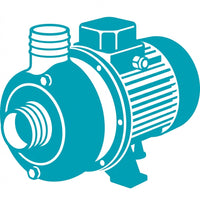
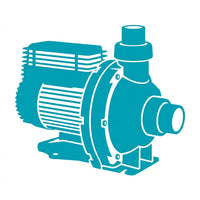
Centrifugal pumps are a common choice for farm irrigation because they are versatile, widely available and suitable for many transfer and sprinkler duties. They are often used where moderate to high flow is needed and the suction setup is sound. They are not ideal for every site, particularly where suction lift is difficult or priming reliability is critical.
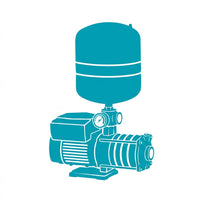
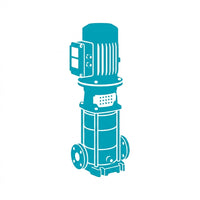
Multistage pumps are useful where higher pressure is required. If the system needs to push water over distance, through elevation or into pressure-sensitive irrigation equipment, a multistage design can be a better fit than a standard single-stage centrifugal pump.
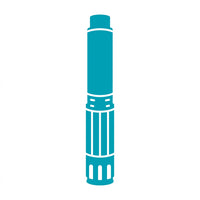
Submersible pumps suit bores, tanks and some transfer applications where placing the pump in the water makes more sense than mounting it above ground. They can be a strong option for deep water sources and can offer quieter operation, though access for servicing is different from an above-ground unit.
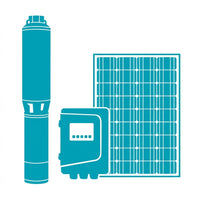
Solar pumping systems can also suit remote farm applications, especially where grid power is limited and daily irrigation demand aligns with available sunlight. They are not the answer for every property. Storage, pumping windows and seasonal variation all need to be considered carefully.
Power supply and operating costs
Pump performance is only half the equation. Power availability often decides what is practical.
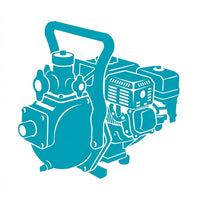
On some farms, three-phase power makes larger electric pump systems the obvious choice. They can be efficient, dependable and well suited to fixed installations. On other sites, petrol or diesel-driven pumps still make sense because they offer mobility or suit locations well away from mains power.
Fuel-driven pumps are useful, but they come with maintenance, refuelling and noise considerations. Electric systems are often cleaner and simpler to operate, but only where power infrastructure is adequate. Solar can reduce running costs in the right application, but sizing errors are costly if the system cannot meet demand during critical periods.
It is worth looking beyond purchase price. A pump that is cheaper to buy but expensive to run can become the dearer option over a few irrigation seasons. Efficiency, motor sizing and how closely the pump matches the required duty all affect long-term cost.
Why oversizing causes as many problems as undersizing
A lot of buyers worry about choosing a pump that is too small, so they go a size up to be safe. In reality, oversizing can create its own issues.
An oversized pump may cycle badly, generate excess pressure, waste energy and place unnecessary strain on pipework and fittings. If operators end up throttling the discharge heavily just to make the system manageable, that is usually a sign the pump was not correctly matched in the first place.
Undersizing is easier to spot because performance drops off quickly. Oversizing is more subtle. The system may appear to work, but it does so inefficiently and often with more wear than expected.
The aim is not the biggest pump. It is the right pump for the duty point, with sensible allowance for operating conditions and some room for real-world variation.
Installation and maintenance still matter
Even a well-selected pump can disappoint if installation is poor. Suction leaks, bad foot valve placement, undersized pipework, poor cable sizing and inadequate protection can all affect performance and service life.
For farm use, serviceability matters as much as specification. If a pump is hard to access, difficult to prime, or dependent on parts that are slow to source, downtime can become a serious operational issue. That is one reason many buyers stick with proven pump brands that have strong support and spare parts availability in Australia.
Routine checks make a difference. Watch for seal leaks, unusual noise, vibration, blocked strainers and pressure changes across the system. Irrigation demand often ramps up quickly when conditions turn dry, and that is usually when neglected issues show themselves.
Getting the selection right the first time
If you are comparing options, bring together the basics before choosing. Water source, required flow, required pressure, pipe length, elevation change, power supply and water quality will answer most of the big questions. Without that information, pump selection becomes guesswork.
For many farms, the smart approach is to match product choice with technical advice rather than buy on pump size alone. A specialist supplier like Foundation Pumps can help narrow the field based on actual duty and application, which is usually the difference between a system that copes and one that performs properly.
A farm irrigation system does not need to be overcomplicated, but it does need to be correctly matched. Get the pump right, and everything downstream tends to work better, from pressure at the outlet to confidence that the next hot week won’t expose a weak point.