







A loss of water pressure can stop far more than a tap. In a commercial building, it can disrupt amenities, cleaning operations, irrigation, process equipment and tenant confidence. This commercial booster system guide sets out the practical factors that determine whether a pressure system will perform reliably, not just on commissioning day but through years of changing demand.
A booster system increases water pressure and maintains it across a building or site where incoming mains pressure is insufficient or inconsistent. The correct arrangement depends on the available supply, the building height, peak flow demand, pipework losses and the level of continuity the site requires. Selecting a pump based on kilowatt rating alone is a common and expensive mistake.
What a commercial booster system does
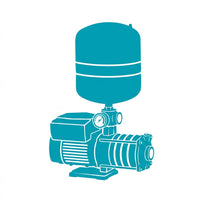
Commercial booster systems draw water from a mains connection, break tank or storage tank and deliver it at a controlled pressure to the distribution network. A typical package includes one or more pumps, motors, a controller, pressure sensors, non-return valves, isolation valves, manifolds and, in many applications, a pressure vessel.
The system must provide enough flow at the required pressure at the furthest and highest outlet. That means it has to overcome static lift, friction loss through pipework and fittings, and the pressure required at the point of use. A ground-level retail tenancy and a multi-storey accommodation building may both need boosted pressure, but their duty requirements are entirely different.
Variable speed drives are common in modern commercial systems. Rather than running at full speed whenever demand begins, the controller adjusts motor speed to match demand. This can reduce energy use, soften starts, lower pressure fluctuation and reduce mechanical stress. However, variable speed is not automatically the best answer for every site. A simple fixed-speed duty/standby arrangement can be more suitable where demand is predictable, controls need to be straightforward, or site maintenance capability is limited.
Commercial booster system guide: start with the duty
The first step is establishing the actual design duty: required flow and total pressure or head. These figures should come from site information and hydraulic requirements, not from the pump being replaced.
Flow demand is influenced by the number and type of fixtures, occupancy, operating hours and whether several high-demand activities can happen at once. Amenities, commercial kitchens, wash-down areas, irrigation zones and process equipment can create very different flow profiles. Peak demand is not simply every outlet running at the same time. Applying the appropriate diversity factor avoids over-sizing the system and paying for capacity that will rarely be used.
Pressure requirements need equal care. Calculate the static height from the pump location to the highest outlet, then add friction losses through pipework, fittings, valves, meters, filters and backflow prevention devices. Finally, allow for the residual pressure needed at that outlet. Long pipe runs, undersized pipe and dirty filters can each impose a larger loss than expected.
Before specifying equipment, confirm these site details:
- Available mains flow and pressure, including worst-case conditions
- Water source and storage capacity, if a break tank is used
- Required flow rate at peak demand
- Minimum and maximum operating pressure
- Pipe sizes, route lengths and major restrictions
- Electrical supply, available space, drainage and access for servicing
Choose the right pump configuration
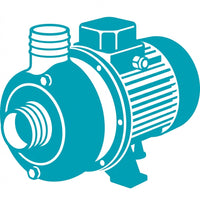
Many commercial booster sets use vertical multistage centrifugal pumps because they are compact, efficient across a useful duty range and capable of producing higher pressure. Horizontal multistage, end-suction centrifugal and specialised pump arrangements may suit other duties, particularly where flow rates are high, water quality is challenging or plantroom layout is restrictive.
For most commercial applications, a minimum duty/standby configuration deserves serious consideration. One pump operates while the other is available to take over in the event of a fault or during maintenance. On larger sites, duty/assist/standby systems offer further resilience: one pump meets normal demand, another assists during peak periods, and a third provides backup.
Redundancy is a trade-off. It increases initial cost and plantroom space, but it reduces the risk that a single pump or motor failure becomes a building-wide water outage. For a small office with a short outage tolerance, a single-pump system may be acceptable. For aged care, accommodation, healthcare, food production or sites with contractual service obligations, standby capacity is usually a sensible requirement.
Pump materials also need to match the water supply. Stainless steel wet ends are widely used for clean water applications, but water chemistry, chlorides, temperature and treatment chemicals should be considered. If the system draws from a tank, assess sediment risk and ensure suitable filtration or strainers are fitted where required. Pumps do not perform well when they are fed poor-quality water or starved of inlet flow.
Control, pressure vessels and protection
The controller is the working centre of a booster system. It starts and stops pumps, alternates duty pumps to share running hours, monitors pressure and responds to alarms. Variable speed controllers can hold a tighter pressure setpoint, while staged fixed-speed controls can be effective for defined demand bands.
A pressure vessel provides a small stored volume of pressurised water. Its role is to limit short cycling when demand is low, such as a single toilet refill or a minor leak. It is not a substitute for correct pump selection. An oversized vessel may mask a poor control setup for a while, but it will not fix inadequate flow capacity or incorrect pressure settings.
Protection features should suit the consequences of failure. Common requirements include dry-run protection, low tank level cut-out, high-pressure alarms, motor overload protection, phase failure protection and leak detection. Where a break tank is installed, controls should protect both the pumps and the tank from running dry or overflowing.
Consider what happens when power fails. Some sites need alarm notification, generator connection provisions or a separate emergency water strategy. The right approach depends on the building use and risk profile, but it should be decided during design rather than after an outage.
Installation details that affect performance
A well-selected booster set can still underperform if installation basics are missed. The suction side is particularly critical. Pumps need adequate inlet pressure or flooded suction conditions to avoid cavitation, noise, vibration and reduced output. Restrictive suction pipework, partially closed valves and clogged strainers can all starve the pump.
Install the system on a stable base with adequate clearance for motor removal, controller access and routine inspections. Provide proper drainage in the plantroom. A leaking mechanical seal or relief event should not leave equipment standing in water. Flexible connections and vibration isolation may be appropriate, but pipework must still be independently supported.
Commissioning should confirm more than whether the pump starts. Test pressure settings, pump sequencing, flow performance, alarms, rotation, duty changeover and tank level controls. Record operating readings as a baseline. These records make fault-finding far easier when performance changes later.
Maintain the system before pressure complaints begin
Commercial boosters are working equipment. A planned maintenance schedule helps identify small issues before they become a no-water callout. Check for leaks, vibration, unusual noise, pressure instability, controller faults and changes in running hours. Inspect strainers and filters, test alarms and verify that standby pumps actually start and carry duty.
Pressure vessel pre-charge also needs periodic inspection. If it is incorrect, the system may short cycle even though the pumps themselves are in good condition. Mechanical seals, bearings, non-return valves and pressure sensors are wear items, not lifetime components.
When replacing an older booster system, assess why it is being replaced. If the original issue is inadequate storage, blocked pipework, increased building occupancy or unstable incoming mains pressure, fitting a larger pump alone may not solve it. A proper review of the full water system avoids repeating the same fault with newer equipment.
Foundation Pumps can assist with pump selection, system upgrades, servicing and repairs where a commercial site needs practical advice alongside suitable equipment. The best booster system is the one matched to the real duty, installed with service access in mind and maintained before the first pressure complaint reaches the facilities team.