
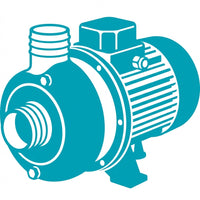
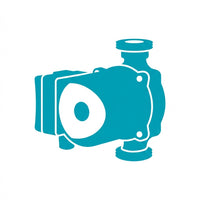
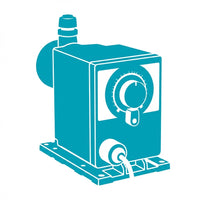
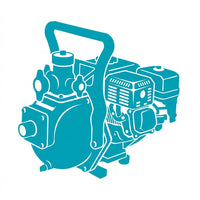

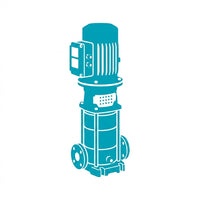


A pump that looks right on paper can still be wrong at the installation. A household pressure pump may cycle too often, a bore pump may not meet the required head, or a drainage pump may block because the solids are larger than expected. This Ebara pump review looks at where the brand performs well, where selection needs care, and what Australian buyers should check before committing to a pump.
Ebara is a well-established pump manufacturer with equipment used across domestic, agricultural, commercial and industrial applications. Its range includes pressure and transfer pumps, stainless steel centrifugal pumps, vertical multistage units, submersible drainage pumps, wastewater pumps and bore pump options. That breadth is a real advantage, but it also means there is no single answer to whether an Ebara pump is right for your job.
Ebara pump review: build quality and reputation
Ebara has built its reputation around engineered pump systems rather than entry-level, short-life equipment. Many of its centrifugal and multistage pumps use stainless steel components, making them well suited to clean water transfer, pressure boosting, irrigation and process water duties where corrosion resistance matters. The finish and materials are generally a step up from lightweight domestic pumps designed for occasional use.
For trade and commercial users, the benefit is not only longevity. Stainless steel hydraulic components can help maintain performance in applications where water quality, temperature or continuous operating hours place more demand on the pump. That said, stainless steel does not make every Ebara pump suitable for every water source. Chlorides, abrasive sand, chemicals and high temperatures still need to be assessed against the specific model’s material and operating limits.
Ebara’s product range is also supported by a long history in water movement and fluid handling. This gives buyers confidence when a pump needs to be repaired, serviced or matched with compatible controls, seals and spare parts. Availability can vary by model and location, so it is worth confirming service parts before purchasing equipment for a critical site.
Where Ebara pumps are a strong fit
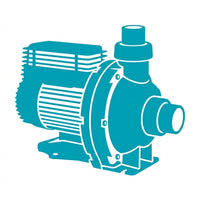
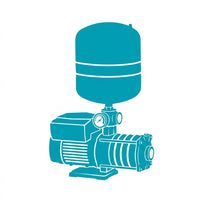
Ebara pumps are commonly a good fit where the duty is clearly defined and the installation calls for dependable equipment rather than the cheapest available option. A clean-water centrifugal pump can suit tank transfer, irrigation supply, washdown and light commercial water movement. Vertical multistage pumps are often selected for pressure boosting, water treatment systems and buildings where a higher head is required.
For drainage and wastewater work, Ebara submersible pumps can be a practical option for stormwater pits, dewatering, greywater and selected sewage applications. The right choice depends on whether the pump is designed for clean water, dirty water, vortex handling or solids passage. A drainage pump with a small solids capability should not be expected to handle rags, wipes or fibrous sewage, regardless of brand.
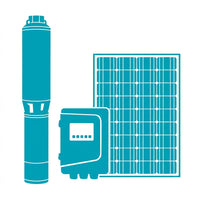
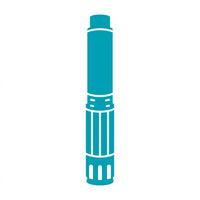
Bore and submersible applications are another area where Ebara can be considered, particularly when reliable water supply is needed for a home, stock water system, irrigation line or commercial process. Bore work is never a case of choosing by outlet size alone. Bore diameter, standing water level, drawdown, desired flow, total head, cable length and power supply all affect the final pump and motor selection.
The main strengths
The strongest point in an Ebara pump review is range. Buyers can source equipment for straightforward residential work through to more demanding commercial duties without stepping away from the same manufacturer. This can simplify specification where several pumps are required across a site.
Another strength is the focus on hydraulic efficiency and component quality in many of the brand’s stainless steel and multistage ranges. When the pump is matched to its duty point, this can support consistent pressure and sensible running costs over the life of the system. For facilities managers and farm operators, stable performance is often more valuable than a lower upfront price that leads to repeated call-outs.
Ebara also has suitable options for applications that need more than a standard surface pressure pump. Vertical multistage designs, for example, are worth considering where pressure boosting, filtration, reverse osmosis feed or process-water duties demand higher pressure at a controlled flow rate.
Limitations to consider before buying
Ebara is not automatically the best value choice for every domestic installation. If you need a simple garden transfer pump used a few times a year, a more basic unit may meet the requirement at a lower purchase cost. Paying for higher-grade materials and a commercial-style construction only makes sense when the water source, run time and consequence of failure justify it.
The range can also be technical. Pump curves, motor configuration, seal materials and electrical requirements matter, particularly on multistage, wastewater and bore systems. Selecting solely from a model name or maximum flow figure can cause poor pressure, excessive cycling, overheating or reduced service life.
Support equipment must be included in the decision. A pressure system may require a correctly sized pressure tank, pressure controller or variable-speed drive. A submersible pump may need suitable cable, protection devices, float switches and non-return valves. A bore pump requires proper pipework and safe installation practices. The pump itself is only one part of a working system.
How Ebara compares with other pump brands
Ebara sits comfortably among established pump brands used by Australian plumbers, irrigators, maintenance teams and industrial operators. It is often considered alongside brands such as Grundfos, Davey, Lowara, Onga and Pedrollo, but direct comparisons must be made model by model.
Davey and Onga are familiar choices for many domestic pressure and household water systems. Grundfos and Lowara are frequently specified for pressure boosting, circulation and commercial water applications. Pedrollo offers a broad range across domestic, irrigation and drainage duties. Ebara is particularly compelling when the application calls for a well-built centrifugal, multistage or submersible pump and the buyer wants engineered materials with a recognised service history.
The best comparison is not brand versus brand. It is duty point versus duty point. Compare the required flow and pressure, power supply, material compatibility, control method, warranty conditions, spare-part support and total installation cost. A pump with a lower purchase price can be the more expensive option if it is undersized, unsuitable for the water quality or difficult to service.
Selecting the right Ebara pump for the duty
Start with the water and the job. Is it clean rainwater, dam water, bore water, greywater, stormwater, sewage or chemically treated water? Then establish the flow required, the vertical lift, pipe length, friction losses and target pressure at the outlet. For a household system, that may mean reliable shower pressure while taps and irrigation are running. For a farm, it may mean delivering a defined flow to troughs or irrigation zones at the far end of the property.
Next, check the available power. Single-phase pumps suit many homes and smaller sites, while three-phase equipment may be the better choice for larger motors or continuous commercial duties. Verify the electrical protection and control arrangement before installation, not after the motor has tripped repeatedly.
For bore, drainage and sewage installations, account for the conditions around the pump as well as its output. Confirm minimum submergence, solids handling capability, float operation, cooling requirements and access for removal. Pumps installed in pits and bores are inconvenient to retrieve, so correct selection and installation are worth the effort.
A supplier with workshop and technical capability can help translate the site details into a workable selection. Foundation Pumps can assist buyers who need to replace an existing unit, match a pump to a curve or investigate a system that is losing pressure, cycling or failing prematurely.
Is an Ebara pump worth buying?
For the right application, yes. Ebara pumps are generally worth considering when reliability, construction quality and application-specific performance matter more than buying the lowest-priced unit. They are particularly suited to buyers who can define the duty accurately and want equipment that can be supported over its working life.
The sensible next step is to measure the job before selecting the model. A pump chosen for the actual flow, head, water quality and control setup has a far better chance of delivering reliable service than one selected from a maximum-flow figure on a box.