





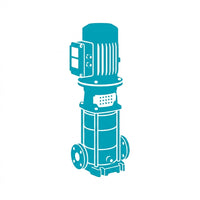


A pump that suddenly sounds harsher, shakes through its base or repeatedly damages seals is giving an early warning. Effective pump vibration diagnosis identifies the cause before a minor issue becomes a failed bearing, broken pipework, motor damage or unplanned downtime.
Vibration is not a fault on its own. Every rotating pump produces some movement, and the acceptable level depends on the pump design, speed, power, mounting arrangement and application. The job is to recognise a change from normal operation, then work methodically through the likely mechanical, hydraulic, electrical and installation-related causes.
Start with the operating conditions
Before dismantling anything, confirm whether the pump is operating where it should be. A pump can be mechanically sound but vibrate excessively if it is working too far from its best efficiency point. This is common where a duty has changed, a valve position has been altered, a filter is blocked, or a replacement pump has been selected without matching the required flow and head.
Record the pump’s suction and discharge pressures, flow if available, motor current, speed, liquid level and valve positions. Compare these readings with the pump curve and the original duty point. Changes in water supply, irrigation demand, pipework, tank levels or process conditions can all move the pump away from its intended operating range.
Listen as well as measure. A rumbling or crackling sound on the suction side may point to cavitation. A regular thump can indicate an obstruction, worn impeller or pipework movement. A high-pitched mechanical sound near the motor or bearing housing may suggest bearing damage. These clues do not replace testing, but they help direct the inspection.
Common causes of pump vibration
Cavitation and suction problems
Cavitation occurs when pressure at the pump inlet falls low enough for vapour bubbles to form and collapse inside the pump. The collapse creates noise, vibration and pitting damage to the impeller and casing. Left unattended, it can quickly affect performance and mechanical components.
Restricted suction strainers, undersized suction pipe, air leaks, excessive suction lift, a partially closed inlet valve and warm liquid are common causes. In bore, transfer and irrigation systems, falling water levels or a blocked foot valve can also reduce available suction conditions. Check the suction line first when vibration appears alongside fluctuating pressure, reduced flow or a sound like gravel passing through the pump.
Not every noisy pump is cavitating. A submerged bore pump, for example, has different installation factors from a surface-mounted centrifugal pump. Confirm the pump type, liquid conditions and suction arrangement before deciding on a remedy.
Misalignment, soft foot and poor mounting
On coupled pump and motor sets, shaft alignment is a frequent source of vibration. Angular or parallel misalignment puts added load on couplings, bearings and seals. It can develop after installation, following a motor replacement, or when pipework strain pulls the pump casing out of position.
Soft foot is another common issue. This occurs when one motor or pump foot does not sit flat on the baseplate. Tightening the hold-down bolts then twists the equipment frame and changes alignment. Check the condition of the base, grout, mounting bolts and anti-vibration mounts. A cracked concrete plinth, loose skid or corroded base can amplify vibration that would otherwise be minor.
Pipework must be independently supported. Pumps are not intended to carry the weight of long suction or discharge lines. If pipework needs to be forced into place to meet the pump flange, correct the pipework rather than pulling it into alignment with bolts.
Bearing, coupling and rotating assembly faults
Worn bearings often produce vibration that rises with speed and gradually worsens over time. Over-greasing, incorrect grease type, contamination, water ingress and poor alignment can shorten bearing life. On many pumps, a failed mechanical seal is a symptom of bearing or shaft movement rather than the original fault.
A damaged or misfitted coupling can create a repeating vibration pattern. Inspect flexible coupling elements for wear, cracking or missing sections, and check guards are secure and not rubbing. For belt-driven equipment, inspect belt condition, sheave alignment and tension. Belts that are too tight can overload bearings; loose belts can slip and introduce irregular movement.
Impeller damage, product build-up and debris can make the rotating assembly unbalanced. This is particularly relevant for wastewater, sump and slurry duties, but clean-water pumps are not immune. A partially blocked impeller may also reduce flow and increase hydraulic instability.
Hydraulic instability and operation off the curve
Centrifugal pumps are designed to operate within a preferred flow range. Too little flow can create internal recirculation, heat build-up and pressure pulsation. Too much flow may overload the motor or create turbulent conditions in the suction and discharge pipework. Either condition can present as vibration.
A pump operating against a mostly closed discharge valve may be noisy even when the motor current is low. Conversely, an oversized pump on an unrestricted system may draw excessive current and run beyond its intended duty. The fix may be as simple as correcting a valve setting, cleaning a filter or repairing a leak. In other cases, the system needs a different impeller trim, variable speed control, bypass arrangement or correctly sized replacement pump.
Electrical and motor issues
Electrical faults can also appear as vibration. Voltage imbalance, single phasing, loose terminals and motor winding problems can create uneven torque or overheating. Check supply voltage and current across all phases where applicable, and compare readings with the motor nameplate.
For single-phase pumps, a weak capacitor or faulty start circuit may cause difficult starting, humming and abnormal movement. Electrical testing should be carried out safely by a qualified person. Isolate and lock out equipment before removing guards, opening terminals or working near rotating components.
A practical pump vibration diagnosis process
A reliable diagnosis starts with a baseline. If the pump is still operating safely, take readings at the bearing housings, motor bearings, baseplate and nearby pipework. Measure in horizontal, vertical and axial directions. A handheld vibration meter can identify overall vibration levels, while a vibration analyser provides frequency data that helps separate imbalance, misalignment, bearing defects and hydraulic excitation.
Trend data is more useful than a single number. A pump that has always shown moderate vibration on a light fabricated skid may not be in immediate danger. A pump whose readings have doubled since the last inspection needs attention, even if it has not yet failed. Keep records of readings, temperatures, pressures, current draw, seal leakage and work completed.
Use the evidence together. High vibration at one times running speed often points towards imbalance. Strong axial vibration can indicate misalignment. Bearing fault frequencies require more detailed analysis, while broad, unstable vibration combined with changing pressure may be hydraulic. These are diagnostic patterns, not shortcuts. Installation condition and pump duty still need to be checked.
Avoid replacing parts before finding the cause
Replacing seals, bearings or even the whole pump without correcting the underlying issue can be expensive and short-lived. A new pump fitted to distorted pipework, a restricted suction line or an unstable base will inherit the same problem.
There are times when repair makes sense, particularly where the casing, shaft and hydraulic components remain serviceable and parts are readily available. Replacement may be the better option when a pump is repeatedly failing, materially oversized, inefficient for the current duty, or no longer supported with practical spare parts. The right decision depends on downtime risk, energy use, repair cost and the criticality of the application.
For domestic pressure systems, a change in vibration may be caused by a simple blocked inlet, failing pressure vessel or loose mounting. For agricultural, commercial and industrial systems, the consequences can be greater, so condition monitoring and application checks are worth building into planned maintenance.
Foundation Pumps can assist with pump selection, repair assessment and technical troubleshooting where a vibration issue points to a wider system problem. Bring operating details, photos of the installation and any readings you have taken. Good information makes it faster to identify whether the answer is adjustment, repair or a better-matched pumping solution.
Treat new vibration as a maintenance signal, not background noise. Checking it early gives you the best chance of protecting the pump, the pipework and the work that depends on reliable water movement.