



A rainwater pump can be perfectly capable on paper and still cause trouble at the tap. The usual issue is not the pump itself - it is the way the pump starts, stops and protects itself between water demands. Choosing the best pump controllers for rainwater systems comes down to the property’s water use, tank arrangement and the consequences of running out of water.
For a small home connected to a single rainwater tank, a simple automatic controller may be all that is needed. A larger property supplying toilets, laundry, gardens and stock water may need pressure storage, dry-run protection and automatic mains changeover. The right arrangement gives consistent pressure without unnecessary pump cycling, nuisance faults or a pump that runs dry when the tank is low.
What a Rainwater Pump Controller Does
A pump controller manages the pump in response to demand. When a tap, toilet or irrigation valve opens, pressure in the line drops or flow begins. The controller starts the pump. Once the demand stops, it shuts the pump down.
That sounds straightforward, but a controller also has a major role in protecting equipment. Depending on the model and system design, it may detect dry running, prevent frequent restarts, maintain a pressure range, accept a tank-level signal or switch the household supply to mains water when rainwater is unavailable.
A controller should never be selected in isolation. It must suit the pump motor, the pressure and flow required at the outlets, the pipework and whether the system is rainwater-only or connected to a mains backup supply.
Best Pump Controllers for Rainwater Systems: Match the Type to the Job
There is no single controller that is best for every rainwater installation. The practical choice is the one that gives stable operation and appropriate protection for the application.
Electronic automatic pump controllers
Electronic automatic controllers, often called press controllers or pump-matic controllers, are common on domestic rainwater pressure pumps. They start the pump when pressure drops as a tap is opened and stop it when water flow ceases. Many also provide dry-run cut-out.
They are a compact option for straightforward tank-to-house or tank-to-garden systems. For a home with modest demand and a correctly sized pressure pump, they can be economical and simple to operate.
Their limitation is that they are generally less forgiving of small leaks, poor suction conditions or complex demand patterns. A leaking toilet cistern, dripping tap or irrigation solenoid that does not close properly can make the pump cycle repeatedly. Before replacing a controller, it is worth checking the system for leaks and blocked filters.
Pressure switch and pressure tank systems
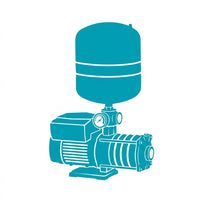
A pressure switch paired with a pressure tank is a proven arrangement where a smoother supply and fewer pump starts are needed. The tank stores a small volume of pressurised water, allowing minor draws - such as filling a glass or flushing a toilet - without immediately starting the pump.
This configuration often suits larger homes, rural properties and installations with frequent short water draws. It can reduce motor starts and provide a more stable response than a basic electronic controller, provided the pressure tank is correctly sized and its air charge is maintained.
The trade-off is more components and periodic checking. If the tank loses its air charge or its bladder fails, the pump may begin cycling again. It is a serviceable system, but it should be treated as part of the overall pump maintenance plan rather than a fit-and-forget item.
Variable-speed pump controllers
Variable-speed controllers adjust pump speed to match demand. Instead of the pump running at full output every time a small tap is opened, the controller can slow the motor and maintain a selected pressure more precisely.
For homes with several bathrooms, accommodation buildings, washdown points or variable irrigation demand, this can deliver noticeably steadier pressure. It may also reduce hydraulic shock in pipework and lower energy use under lighter loads.
These controllers cost more and need correct commissioning. They are best applied where the benefits justify the extra investment, not simply because they are more advanced. Pump compatibility, motor type, electrical supply and the required duty point all need to be checked first.
Rainwater mains changeover controllers
Where rainwater supplies internal fixtures, an automatic changeover system can switch to mains water when the tank reaches a low level. This is particularly useful for toilet and laundry supplies where water availability matters every day.
A proper rainwater-to-mains arrangement must protect the drinking water supply from cross-connection and meet local plumbing requirements. The controller is only one part of that setup. Solenoid valves, backflow protection, approved plumbing layout and the tank-level sensor must all work together.
Avoid treating a changeover controller as a workaround for poor tank capacity. If the household regularly runs out of stored water, reviewing roof catchment, tank volume and water use may be more valuable than changing the controls alone.
Tank-level and dry-run protection
Dry running is one of the most common causes of avoidable pump damage. It can occur when the tank is empty, a suction strainer is blocked, a valve is shut or air enters the suction line. A controller with dry-run protection can stop the pump before heat and wear cause serious damage.
For rainwater systems, a separate float switch or level probe can provide a more reliable indication of a low tank than relying only on pressure or flow detection. This is particularly useful on multi-tank installations, systems with long suction lines and pumps that supply high-demand irrigation zones.
Select a Controller by System Behaviour, Not Just Pump Size
Pump power alone does not determine the right controller. A 1.1 kW pump may operate well with different control methods depending on whether it serves one bathroom, a workshop washdown bay or a property with multiple irrigation zones.
Start by looking at how water is actually used. Consider the highest likely simultaneous demand, such as two showers running while a toilet refills and a washing machine is in use. Then assess whether demand is mostly short and frequent, or longer and continuous. Short, frequent demand favours a pressure tank arrangement, while widely varying flow may justify variable-speed control.
The pressure requirement also matters. A controller cannot compensate for a pump that is undersized for the required flow and head. If outlets are weak at the far end of the home, the issue may be pipe friction, elevation, filter restriction or inadequate pump performance rather than the controller.
For an existing system, record the pump’s model, motor rating, maximum pressure, current controller type and the symptoms being experienced. That information makes technical selection far more accurate than choosing by inlet and outlet size alone.
Installation Details That Affect Reliability
Good control equipment still needs sound installation. The pump should be protected by a clean, correctly sized rainwater filter, with suction pipework sized to avoid excessive restriction. Air leaks on the suction side can lead to loss of prime, erratic starts and dry-run faults that appear to be controller problems.
Electrical protection is equally important. Outdoor controllers need suitable weather protection, correct wiring and an electrical supply installed in accordance with applicable requirements. Pumps and controllers should be accessible for servicing rather than buried behind tanks, lining or fixed shelving.
Check valve placement also needs care. An incorrectly positioned non-return valve can prevent a controller from sensing demand correctly or trap pressure where it should not be trapped. On systems with a pressure tank, switch cut-in and cut-out pressures must be set to suit both the pump and the tank pre-charge.
Common Signs the Controller Needs Attention
A controller fault is not always obvious, but a few operating symptoms are worth investigating early:
- The pump starts and stops repeatedly when no obvious water is being used.
- Pressure surges or drops sharply when more than one outlet is open.
- The pump runs continuously after the tank level falls.
- The controller trips into fault mode after rainwater demand begins.
- Water supply does not return after a power outage or low-water event.
A Practical Way to Make the Right Choice
For a basic domestic rainwater setup, an electronic controller with dependable dry-run protection is often a sensible starting point. For a larger home with frequent short draws, a pressure switch and correctly sized pressure tank can offer better pump protection and smoother operation. Where pressure consistency across multiple outlets is the priority, a variable-speed system may be worth considering. If household fixtures need guaranteed supply, a compliant rainwater mains changeover arrangement is the appropriate path.
The best result comes from matching the controller to how the water system behaves in the real world, then installing and maintaining it properly. If there is any uncertainty around pump duty, pressure settings, tank-level control or mains changeover, getting application-based advice before purchasing can prevent downtime and protect the equipment already in place.