





Floodwater rarely arrives clean, shallow or convenient. It can carry silt, leaves, mulch, gravel and rubbish through garages, under houses, across farm sheds and into low-lying work areas. The best pumps for floodwater are not simply the biggest pumps available. They are the pumps matched to the water condition, lift height, access and volume that must be moved.
A pump that is undersized can leave a property exposed for longer than necessary. One selected for clean water and placed into dirty water may block, overheat or suffer premature wear. Getting the application right at the start gives you a better chance of moving water quickly and protecting the equipment for the next event.
Start with the Floodwater You Need to Move
The first question is whether the water is relatively clean, dirty with small suspended solids, or heavily contaminated with debris. This determines the pump category before flow rate, power source or brand are considered.
Clear or lightly dirty rainwater in a basement, courtyard or sump pit may suit a drainage or submersible clean-water pump. These units are compact, straightforward to position and often fitted with automatic float switches for unattended operation. They work well where debris is limited, but their narrow passages can clog when leaves, gravel or fibrous material enter the intake.
Dirty-water submersible pumps are designed for tougher conditions. They usually have a larger solids passage and an impeller arrangement better suited to water containing mud, sand and small debris. They are a practical choice for flooded garages, building sites, stormwater pits and areas where water is dirty but not full of large branches or heavy sludge.
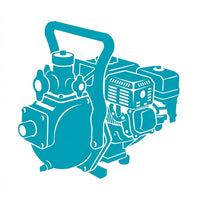
For serious debris, a trash pump is generally the better option. These surface-mounted centrifugal pumps are commonly petrol-driven and use larger passages to handle solids that would stop a standard drainage pump. They are well suited to farmyards, construction sites, creek overflow and outdoor flood recovery where access to mains power is limited. A trash pump is not a substitute for screening out oversized debris, but it offers far more tolerance than a standard submersible unit.
The Best Pumps for Floodwater by Application
There is no single pump type that suits every flood event. A practical selection comes down to the location and what the water contains.
Flooded Homes, Garages and Under-House Areas
For domestic floodwater with limited debris, a submersible drainage pump is often the most effective option. It can be lowered directly into the affected area and discharge water through a layflat or reinforced hose to a suitable drainage point. Look for a low-level suction capability if removing the last few centimetres of water matters, such as in a garage or living area.
If the water is muddy or carries leaf litter, choose a dirty-water submersible pump with an appropriate solids-handling rating. Check that the float switch has room to operate. In a narrow pit or confined under-house space, a float can become trapped against a wall or pipework, preventing automatic operation.
Sheds, Farms and Outdoor Low Points
A petrol-driven trash pump is often the right tool where floodwater contains visible debris or where power has been interrupted. It can move substantial volumes over short to moderate distances and can be positioned on stable ground outside the flooded area.
The trade-off is that surface pumps need priming before use and require regular attention to fuel, oil level and suction connections. They also need a sound suction hose with a strainer. A collapsible garden hose on the suction side will restrict flow and can cause the pump to lose prime.
Building Sites and Commercial Areas
Site floodwater can contain abrasive sand, concrete fines, timber offcuts and general rubbish. A heavy-duty dirty-water pump or trash pump is usually more suitable than a light domestic drainage pump. Where water needs to be moved continuously, consider the duty cycle, abrasion resistance and access for cleaning the intake.
Commercial facilities may also need a standby arrangement. A second pump, a high-level alarm or a generator-ready system can be worth the investment where water ingress would halt operations or damage stock and equipment.
Match Flow Rate to Head, Not Just the Box Rating
Pump performance is often misunderstood during an urgent clean-up. The maximum flow figure shown for a pump is typically measured with little or no lift. As discharge height increases, the flow rate drops.
Head is the vertical distance from the water level at the pump to the highest point of the discharge line. It also includes friction losses through long hoses, elbows, valves and narrow pipe. A pump moving water from a shallow garage to the footpath may perform very differently from the same pump lifting water several metres up a driveway or into a raised stormwater connection.
Check the pump curve rather than relying only on a litres-per-minute headline figure. Select a unit that delivers the required flow at your actual total head. As a guide, allowing for more capacity than the bare minimum is sensible during flood recovery, particularly where hose runs are long or water levels may rise again.
Hose diameter matters as well. A larger discharge hose usually reduces friction and helps the pump deliver its available flow. Restricting a high-capacity pump through an undersized hose wastes performance and can increase operating time.
Choose the Right Power Source
Electric submersible pumps are convenient for accessible residential and commercial work, provided the electrical supply is safe and protected. They are quieter, generally easier to start and can be fitted with float switches for automatic control. However, they must never be operated with damaged leads, unsafe connections or power points exposed to water.
Petrol-powered pumps offer mobility and independence from mains power. They are useful across large properties, remote paddocks and outdoor sites after storms. Keep the engine well away from enclosed spaces, as petrol engines produce dangerous exhaust fumes. They must operate outdoors with adequate ventilation.
For fixed commercial applications, a three-phase pump may provide a practical long-term solution where the electrical infrastructure is available. These systems should be selected with suitable controls, overload protection and an installation plan that allows maintenance access.
Solids Size and Pump Construction Matter
A pump's solids-handling specification is not a minor detail. It indicates the approximate size of particles the pump can pass without blocking under normal conditions. If floodwater contains debris larger than that rating, the intake needs protection or the debris needs to be removed before pumping begins.
Open or semi-open impellers are commonly used for dirty-water duties because they tolerate solids better than closed impellers. This comes with a trade-off: they may be less efficient when pumping clean water, and abrasive grit can still wear internal components over time. In flood conditions, reliability and blockage resistance are usually more valuable than peak efficiency.
If water contains sewage, chemicals, oils or other contaminants, do not assume a standard flood pump is suitable. These conditions may require a wastewater, sewage or chemical-compatible pumping solution, along with appropriate handling and disposal procedures.
Set Up the Pump for Reliable Operation
Position a submersible pump on a stable, reasonably flat base where possible. Placing it directly into deep mud can bury the intake or draw in excessive sediment. A paver, pump stand or coarse screen beneath the unit can help keep the suction area clear without restricting water flow.
For a surface pump, keep the suction lift as short as practical and ensure every suction fitting is airtight. Even a small air leak can stop the pump priming properly. Fit a strainer to prevent larger debris entering the pump, and place the discharge hose where it will not send water back towards the building, neighbour's property or an unstable slope.
Avoid running any pump dry. Water cools and lubricates many pump components, particularly submersible units. Once the water level falls, switch off the pump, inspect the intake and decide whether a low-level pump, wet vacuum or manual clean-up is needed for the remaining water.
Safety Comes Before Fast Pumping
Floodwater and electricity are a dangerous combination. Do not enter water near electrical equipment, damaged wiring, switchboards or fallen powerlines. Isolate power only when it is safe to do so, and use a licensed electrician where there is any doubt.
Wear suitable boots, gloves and protective clothing, especially where water may be contaminated. Keep children and bystanders clear of hoses, electrical leads and moving equipment. Before starting a pump after storage, inspect the casing, cable, plug, fittings, seals and hose clamps for damage.
After the job, flush the pump with clean water if the manufacturer permits it, remove lodged debris and let it dry before storage. Check engine oil and fuel systems on petrol units, and replace worn strainers, seals or hoses before the next storm season.
The right flood pump is one that can handle the water you have, deliver enough flow at the required head and keep operating safely when conditions are far from ideal. If the application is unclear, Foundation Pumps can help match the pump, hose, fittings and accessories to the job before an urgent weather event turns a small drainage issue into a major clean-up.