
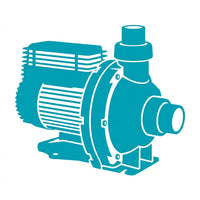
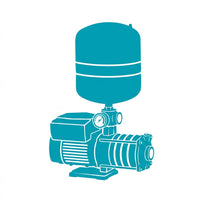
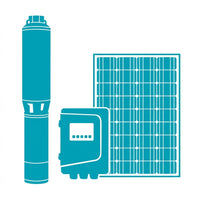
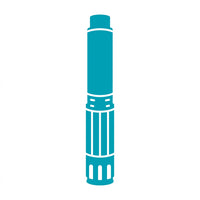



A bore that produces clean water can still deliver poor pressure, short pump life or unreliable supply if the pump is not matched to the bore and demand. This bore water pump selection guide covers the figures that matter before choosing a submersible bore pump for a house, farm, irrigation system or commercial site.
The right pump is not simply the largest unit that fits down the bore. It must deliver the required flow at the total pressure the system needs, while operating within the bore’s sustainable yield. Get that balance right and the system should provide consistent water with less cycling, lower running costs and fewer call-outs.
Start with the water demand, not the pump
First establish how much water the property needs at its busiest realistic period. A domestic bore supplying a home, garden taps and a small irrigation zone has a different duty from a farm bore feeding stock troughs, a wash-down point and several irrigation zones.
Flow is commonly expressed in litres per minute (L/min) or litres per second (L/s). For a household pressure system, the required flow is based on likely simultaneous use: showers, toilets, taps and outdoor demand. For irrigation, calculate the flow required by the zone that will run at one time, rather than adding every zone together if they are operated sequentially.
Avoid sizing from a single appliance or outlet. A pump that meets one shower’s flow requirement may struggle once garden irrigation starts. Equally, oversizing a pump can cause rapid cycling, excessive pressure, wear on pipework and a bore that is pumped down faster than it can recover.
Allow for the bore’s sustainable yield
The bore yield is the amount of water it can provide continuously without the water level falling to a point where the pump runs dry or performance becomes unstable. A driller’s report, pump test or historical operating data is the best source of this information.
There is a clear trade-off here. A high-capacity pump may provide excellent short-term flow, but it is the wrong choice if it exceeds the aquifer’s replenishment rate. In lower-yield bores, a storage tank can be the practical answer. The bore pump fills the tank at a safe rate, then a separate pressure pump supplies the house, livestock system or irrigation network when demand peaks.
Calculate total dynamic head
Pump performance is selected against total dynamic head, often called TDH. This is the total resistance the pump must overcome, not just the depth of the bore.
TDH includes the vertical lift from the pumping water level to the highest discharge point, the pressure required at that point, and friction losses through pipe, fittings, valves, filters and treatment equipment. If water is lifted 45 metres but needs to arrive at a tank or pressure system with useful pressure, a pump rated only for 45 metres of head will not be sufficient.
Pressure can be converted to head as a working guide: 100 kPa is roughly 10 metres of head. For example, if a system requires 300 kPa at the outlet, allow approximately 30 metres of pressure head on top of the vertical lift and friction losses.
Friction losses become more significant on long runs, undersized rising main, restrictive filters and complex irrigation layouts. This is particularly relevant on rural properties where the bore may be hundreds of metres from a tank, homestead or pivot. Use the actual pipe internal diameter, length and intended flow when calculating losses. Guessing can produce a system that looks adequate on paper but runs short of pressure in service.
Use the pump curve properly
Every bore pump has a performance curve showing flow against head. The required operating point is where your calculated flow and TDH meet on that curve. Select a pump that performs efficiently at or close to that point, rather than one that only reaches it at the extreme end of its range.
A pump operating too far left on its curve may have low flow and poor cooling. One operating too far right may draw excessive current, provide inadequate pressure or run beyond its intended duty. Motor size alone does not tell you whether a pump suits the application. The pump curve does.
Measure the bore before selecting equipment
Bore diameter determines the maximum pump diameter, but there is more to check than nominal casing size. Confirm the actual internal diameter, bore depth, static water level and pumping water level. The pumping level is especially important because it reflects drawdown while water is being extracted.
The pump must be installed with adequate submergence below the pumping water level so the motor remains cooled and the pump does not draw air. It should also sit clear of the bore bottom to reduce the risk of drawing in sand, silt or debris. The correct installation depth depends on the bore construction, water level behaviour and pump manufacturer’s requirements.
For narrow bores, a slimline submersible pump may be required. For deeper or higher-demand applications, the cable, drop pipe, safety rope or support arrangement, cable guards and check valves all need to be specified as part of the system. Treating these as afterthoughts is a common cause of premature failure or difficult retrieval later.
Match materials to bore water quality
Bore water is not always clean water. It can contain sand, iron, manganese, salinity, hardness, dissolved gases or corrosive minerals. These conditions affect both the pump construction and the equipment installed downstream.
Stainless steel components suit many applications, but not every stainless grade performs the same way in saline or aggressive water. In challenging conditions, material selection may need to account for chloride levels, pH and temperature. A water analysis is worthwhile where corrosion, staining, scale or unusual odours are present.
Sand is another major consideration. Fine abrasive particles can wear impellers, diffusers and seals quickly. If the bore is producing sand, investigate the bore condition and development first rather than simply fitting a more powerful pump. Depending on the situation, a sand separator, suitable intake arrangement or lower-flow pump may help, but the underlying cause should not be ignored.
Water treatment also affects pump selection. Filtration, UV, reverse osmosis and pressure tanks all add resistance or have defined flow and pressure requirements. The bore pump and any booster pump must be sized around the complete treatment train, not just the raw water lift.
Choose a control method that protects the system
A bore pump needs protection against dry running, overloads and excessive starts. The best arrangement depends on whether the pump fills a tank, supplies a pressure system directly or supports irrigation.
For tank filling, level switches or probes can start and stop the bore pump according to tank level. Dry-run protection can respond to low water level, underload, pressure loss or a flow-related signal. For direct pressure supply, a pressure switch and pressure tank may be used, while variable-speed control can maintain steadier pressure where demand changes throughout the day.
Variable-speed systems can be useful, but they are not automatically the best choice. They add cost and require suitable electrical setup, motor compatibility and protection. A conventional bore pump filling a storage tank, followed by a correctly sized pressure pump, is often a simpler and highly reliable solution for rural properties with variable demand.
Also consider the power supply before finalising the pump. Confirm whether the site has single-phase or three-phase power, available voltage, cable run length and switchboard capacity. Long cable runs need correct cable sizing to prevent voltage drop, which can damage motors or cause nuisance tripping. Solar pumping can be an effective option for remote stock water and transfer duties, provided the daily water requirement, solar resource and storage capacity are designed together.
Common bore pump selection mistakes
The most expensive mistakes usually begin with incomplete site information. Selecting by horsepower, copying a neighbour’s pump model or using bore depth as the only figure can lead to poor results. So can ignoring pipe friction, choosing a pump above the bore yield or fitting a pressure system without adequate dry-run protection.
Another issue is designing for an occasional peak demand without storage. If a bore only yields a modest continuous flow, storage gives the system time to build water availability. It can be more effective than forcing a high-flow pump to perform a duty the bore cannot support.
Before ordering, record the bore diameter and depth, static and pumping water levels, tested yield, required flow, discharge pressure, pipe size and length, power supply, water quality and intended control method. These details allow a pump specialist to select from the correct performance range and specify the supporting equipment properly.
Foundation Pumps can assist with application-based bore pump selection, including the pump, controls, pipework considerations and protection needed for dependable operation. A few accurate site measurements at the start are far cheaper than pulling a failed pump from a deep bore after the fact.
A bore pump is expected to work out of sight for years at a time. Give the selection process the same care as the bore itself, and build the system around sustainable supply, usable pressure and practical service access.