



A treatment plant can produce clear recycled water and still fail at the point of use if the storage tank is undersized, the pump cannot meet peak demand, or the pipework allows cross-connections. Water reuse systems work as a complete process, not as a collection of separate products. For Australian homes, farms, commercial sites and industrial facilities, getting the whole system right is what turns available water into a dependable asset.
What water reuse systems do
Water reuse systems collect water that would otherwise leave the site, treat it to a defined quality, store it and distribute it for an approved non-potable use. Depending on the application, the source may be rainwater, greywater, treated wastewater, process water, cooling water or stormwater.
The end use determines the treatment level. Rainwater used for garden irrigation may require basic screening, first-flush diversion and filtration. Treated greywater for toilet flushing needs more careful treatment, disinfection and controlled distribution. Commercial wastewater reuse can require a multi-stage process involving solids separation, biological treatment, filtration, membranes, UV disinfection or chemical dosing.
The practical goal is not to treat every litre to drinking-water standard. It is to deliver water of the required quality, at the required flow and pressure, for the intended use. Over-specifying treatment adds unnecessary capital and operating cost. Under-specifying it creates health, compliance, odour and maintenance problems.
Start with the water balance, not the pump
Pump selection matters, but it should follow a site water balance. Before choosing equipment, establish how much water is available, how much can realistically be reused, when demand occurs and what happens when supply is short.
A school may generate wastewater steadily through the day but need most of its recycled water for toilet flushing during breaks. A farm may collect large rain events but need irrigation water during long dry periods. A manufacturing site may have consistent process-water demand but variable water quality. Each pattern affects storage size, treatment capacity and pump control.
Measure or estimate the source volume over time, then map the intended demand. Include seasonal conditions, occupancy changes, irrigation schedules and future expansion. The gap between supply and demand is usually where storage earns its place. A tank that is too small can force treated water to discharge when demand is low, then leave the site relying on mains water when demand rises.
There also needs to be a clear plan for overflow, high tank levels and treatment downtime. Reuse systems should fail safely. If recycled water is unavailable, an approved mains-water changeover or backup supply may be required for critical uses such as toilet flushing. This must be designed to prevent any risk of backflow or cross-connection.
Match treatment to the end use
Water quality varies significantly between sources. Greywater containing soaps and organics behaves differently from roof runoff, while process water may contain oils, suspended solids, salts or chemicals that affect treatment options.
For irrigation, the key questions often include suspended solids, pathogens, salinity and nutrient levels. High solids can block drippers and sprinkler nozzles. High salinity can affect soil and plant health over time. For toilet flushing, visual clarity, odour control, microbial management and reliable residual disinfection are often more relevant.
Treatment systems commonly use a sequence rather than one component. Screening protects downstream equipment from leaves, lint and larger debris. Settling or separation removes heavier solids. Filtration captures finer particles, while UV or chemical disinfection manages microbial risk. Where water quality is difficult or reuse requirements are high, membrane filtration may be appropriate.
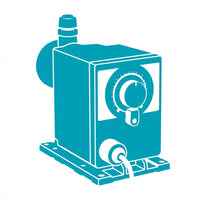
Every treatment stage has a trade-off. Fine filtration improves water quality but creates pressure loss and requires cleaning or replacement. UV units avoid chemical handling but depend on clear water, correct flow rates and lamp maintenance. Chemical dosing can provide residual protection in storage and distribution, but it requires accurate dosing, safe handling and routine checks. The right approach depends on the source water, end use, operating skill on site and approval requirements.
Pumps and pressure are where reliability is won or lost
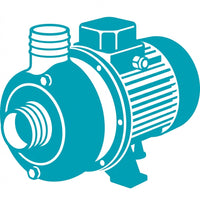
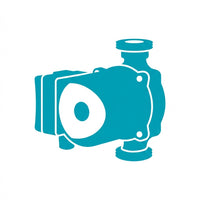
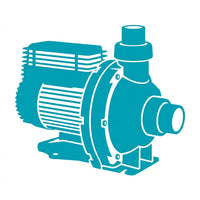
Treated water is only useful if it reaches the fixture, irrigation zone or process line at suitable pressure. A reuse pump set must be selected for the real duty point: required flow, total dynamic head, pipe losses, elevation, filter losses and pressure needed at the outlet.
A common mistake is selecting a pump from its maximum flow or maximum head figure. Those figures do not represent what the pump can provide at the same time. A pump curve shows the relationship between flow and head, and the duty point needs to sit in an efficient, stable part of that curve.
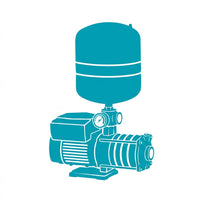
For smaller systems, a pressure pump with an electronic controller may suit intermittent demand. Larger commercial systems often benefit from duty/standby pumps, a pressure vessel and variable-speed control. Variable-speed drives can reduce cycling and maintain stable pressure where demand varies, but they add controls complexity and need proper commissioning.
Consider the water itself when selecting pump materials and seals. Recycled water can contain fine solids, dissolved chemicals or residual disinfectants that shorten component life if the pump is not suited to the application. Strainers, correctly sized filters and accessible isolation valves help protect the pump and make routine service faster.
Storage, pipework and separation need equal attention
Storage tanks should be sized around the water balance, not simply the largest tank that fits on site. They need suitable access for inspection and cleaning, screened vents, overflow management and level controls. Where water is stored for longer periods, turnover and disinfection management become more important to prevent quality deterioration.
Pipework must clearly separate recycled water from potable services. Purple pipework and identification are commonly used for non-potable recycled-water services, but colour alone is not a safeguard. The design needs correct labelling, approved backflow prevention and physical separation, with installation and commissioning completed in line with applicable local requirements.
This is especially important on sites with multiple contractors or future maintenance teams. A poorly labelled valve or undocumented alteration can create a serious cross-connection risk years after installation. Keep drawings, valve schedules, treatment records and maintenance instructions with the site documentation.
Plan maintenance before commissioning
A reuse system is not fit-and-forget equipment. Its maintenance requirements should influence the design from the start. If filters are difficult to reach, they will be neglected. If a pump cannot be isolated without stopping the entire system, small repairs become disruptive. If alarms are not visible or monitored, faults may go unnoticed until water quality or supply fails.
A workable service plan should cover inspection of screens and filters, pump operation, pressure and flow checks, tank levels, disinfection performance, dosing chemicals where used, UV lamps, calibration of sensors and cleaning intervals. The exact frequency depends on loading, water quality and equipment type.
For commercial and industrial sites, remote monitoring can be worthwhile where a loss of reuse supply has operating consequences. High and low tank alarms, pump fault alerts, pressure alarms and treatment-status signals allow maintenance teams to respond before the problem becomes a shutdown.
When a reuse project needs specialist input
Simple rainwater harvesting for garden use can be straightforward. Systems involving greywater, treated sewage, process water, public-facing facilities or large irrigation networks need more detailed engineering, compliance review and commissioning. The risk profile changes when people can be exposed to the water, when the site has critical demand or when discharge limits apply.
Bring in the right expertise early if the source water is variable, the system must meet a defined recycled-water quality, or the project needs multiple pumps, automated controls and backup supply. A pump supplier with application knowledge can help match pump duty, filtration losses, controls and service access before equipment is installed.
Foundation Pumps can assist with practical pump and water equipment selection where reliable transfer, pressure boosting or system upgrades are part of the project. The best result comes from treating pump selection as one part of a properly planned reuse system, not the final item on the purchase order.
A well-designed system should make water reuse ordinary: the tank level is managed, the pump starts when required, the water reaches its intended use and maintenance is planned rather than urgent. That is the standard worth designing for.