





A dosing pump that is too small can leave water treatment inconsistent. One that is oversized may cycle poorly, waste chemical and make fine adjustment difficult. If you are searching for how to select dosing pump equipment, start with the actual dosing duty, then check the chemical, system pressure and controls around it. The pump itself is only one part of a reliable chemical dosing system.
How to select a dosing pump: define the duty first
The first requirement is the volume of chemical that must be injected over a given time. This is normally expressed as litres per hour (L/h), millilitres per minute (mL/min) or litres per day. Do not select a pump from the size of the chemical drum alone. A 20-litre drum may be emptied in one day on one site and last several months on another.
For a water treatment application, calculate the required chemical mass from the treatment dose and water flow, then convert it to liquid volume using the product concentration and density. For example, a system treating 10 kL per hour at a required dose of 5 mg/L needs 50 g of active chemical per hour. The liquid product label and safety data will tell you how that converts to litres per hour.
Allow sensible capacity margin, but avoid treating bigger as better. A common approach is to size the normal duty within the middle part of the pump's adjustment range, often around 30 to 80 per cent of maximum output. This gives room to increase dosing during higher demand while retaining enough adjustment for normal operation. A pump running constantly at its lowest setting may not provide stable, repeatable output.
Also establish whether the dose is continuous, intermittent or proportional to flow. A small continuous chlorine dose for a bore water treatment system is different from a batch addition of coagulant into a process tank. The required run time, stroke rate and turndown all influence the right pump and controller.
Check discharge pressure, not just flow rate
A dosing pump must inject chemical into a line or vessel at a pressure higher than the pressure at the injection point. This is where otherwise suitable pumps are often ruled out.
Measure or confirm the maximum pressure at the injection point, including any pressure changes during operation. Then account for friction loss through the discharge tubing, injection quill, non-return valve, calibration column and fittings. A safety margin is appropriate, particularly where filters block over time or the receiving line operates at variable pressure.
For an open tank, discharge pressure may be low, but suction and discharge lift still matter. For a pressurised irrigation main, filtration plant or boiler feed line, pressure capability is critical. Never assume a pump rated for a stated flow will deliver that flow at your system pressure. Read the pump performance data at the intended operating point.
Where the discharge line can be affected by siphoning, backflow or fluctuating pressure, include the correct accessories. A back-pressure valve helps maintain stable pump performance in low-pressure systems. An anti-siphon valve prevents uncontrolled chemical transfer. A pressure relief valve protects the discharge line and pump from a blocked line. These are functional parts of the installation, not optional extras when the application calls for them.
Match pump materials to the chemical
Chemical compatibility is a safety, reliability and maintenance issue. The wetted parts of a dosing pump include the pump head, diaphragm or tube, valves, seals, tubing, injection fittings and foot valve. Every one of these components must suit the chemical at its working concentration and temperature.
Acids, sodium hypochlorite, caustic soda, liquid fertiliser, flocculants and polymers can each require different materials. PVDF, PTFE, polypropylene, PVC, EPDM, FKM and Santoprene are commonly used, but none is universally compatible. A material suitable for one acid may be unsuitable for another, and concentrated chemical can behave very differently from a diluted solution.
Sodium hypochlorite deserves particular care. It can gas off, degrade some elastomers and cause air locking in a suction line. A suitable pump head and valve arrangement, short suction lift, correct tubing and routine inspection all make a difference. Some viscous chemicals, including certain polymers and fertiliser blends, may need larger valve passages, a slower stroke speed or a different pump design to maintain accurate dosing.
Confirm compatibility using the chemical supplier's documentation and the pump manufacturer's chemical resistance information. Do not rely on the name of the chemical alone. Concentration, temperature and contaminants can change the answer.
Choose the right dosing pump type
Most applications are served by either diaphragm metering pumps, peristaltic pumps or, for higher-duty work, progressive cavity and other positive-displacement designs.
Diaphragm metering pumps
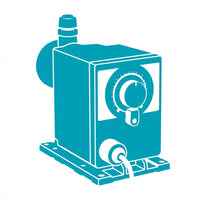
Diaphragm dosing pumps are widely used for water treatment, irrigation, pools and industrial chemical injection. They provide good pressure capability, accurate metering and isolation between the drive mechanism and chemical. Solenoid-driven models suit many lower-flow duties, while motor-driven diaphragm pumps are generally better suited to higher flow, higher pressure or more demanding continuous operation.
They work well with many clean, low-viscosity chemicals. However, valve condition matters. Crystallising liquids, abrasive slurry or highly viscous products can affect check-valve performance and dosing accuracy.
Peristaltic pumps
A peristaltic pump moves chemical through a flexible tube, so the fluid contacts only the tube and fittings. This can simplify compatibility decisions and works well for some corrosive, gassing or viscous liquids. They are often used for pool chemicals, disinfectants, laboratory applications and low-pressure dosing.
The trade-off is tube wear. The tube is a service item, and output can change as it ages. Select a tube material rated for the chemical and build replacement intervals into the maintenance plan.
Progressive cavity and specialist pumps
For thick polymers, slurries, high-viscosity chemicals or applications needing a smooth, low-pulse flow, a progressive cavity pump may be the better choice. These systems need careful selection of stator material, seals, dry-run protection and drive controls. They are generally not the first option for a simple domestic treatment system, but they are common in more demanding commercial and industrial dosing duties.
Set the control method around the process
A manually adjusted pump can be adequate where water flow and chemical demand remain steady. It is less suitable where demand changes through the day, such as variable irrigation flow, process water use or a treatment plant with changing inflow.
For variable demand, consider proportional dosing. The pump can be paced by a water meter pulse, controlled by a 4-20 mA signal, or adjusted by a controller measuring pH, ORP, chlorine residual or another process value. Each method has a place. Flow-paced dosing follows water volume, while feedback control responds to the measured treatment result. In some systems, both are used together to improve consistency.
Before selecting controls, check what signals are available on site and whether the pump can accept them. Also consider power supply, enclosure rating, remote alarm requirements and whether a facilities team needs simple local adjustment. The most capable controller is not always the best choice if it creates unnecessary complexity for the operator.
Design the installation, not just the pump purchase
Accurate dosing depends on good suction conditions. Position the chemical drum or day tank close to the pump, keep the suction line short and avoid unnecessary bends or restrictions. A flooded suction arrangement is often preferable where practical, especially with viscous or gas-forming chemicals. If suction lift is unavoidable, ensure it stays within the manufacturer's limits.
A complete installation commonly needs a foot valve and strainer, suction tubing, level switch, injection valve or quill, isolation points and suitable bunding. Depending on the chemical and site requirements, it may also need a calibration column, pulsation dampener, pressure gauge, leak detection and a flush connection. Use chemical-rated components throughout rather than mixing general-purpose fittings into a corrosive service.
Chemical handling requirements must be considered from the start. Provide secure storage, ventilation where required, clear labelling, spill containment and access for drum changes. Operators should be able to prime, isolate and calibrate the pump without exposure to splashes or a poorly supported chemical container.
Plan for calibration and service access
A dosing pump's displayed setting is not proof of actual output. Check the delivered volume during commissioning and at regular intervals using a calibration column or timed drawdown test. Record the result alongside the pump setting, stroke speed and system pressure. This quickly identifies worn valves, diaphragm issues, tube wear, blocked injection points or air leaks.
Service requirements vary by pump type and chemical. Diaphragms, valve balls, valve seats, injection valves and peristaltic tubes are wear components. Keep suitable spares on hand for critical systems, particularly where a failed pump can stop treatment, damage equipment or interrupt production.
When the duty is unclear, provide the chemical name and concentration, required dose, water or process flow, discharge pressure, temperature, viscosity, power supply and preferred control method. That information gives a pump specialist enough detail to select a complete, workable system rather than simply matching a catalogue flow figure.
A correctly selected dosing pump should be easy to adjust, safe to service and capable of holding its dose as site conditions change. Taking the time to confirm the application before purchase is usually far cheaper than correcting an unreliable chemical dosing system after it is installed.