
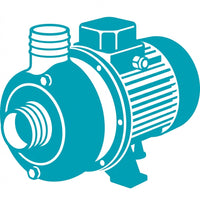
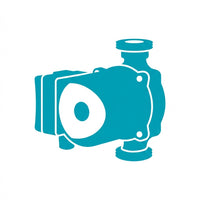
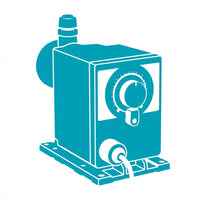
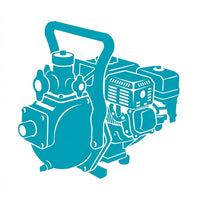





A pressure pump that is too small will leave you with weak showers, slow fill times and irritated customers or tenants. One that is too large can short cycle, waste power and wear out early. If you are working out how to choose pressure pump equipment for a house, farm, irrigation line or light commercial site, the job starts with the application, not the brand badge.
The right pump is the one that matches your flow demand, pressure requirement, water source and control method without being oversized for the work. That sounds straightforward, but this is where most selection mistakes happen. People often focus on horsepower first, when the better approach is to look at what the system needs the pump to do every day.
How to choose pressure pump for your application
Start with the basic question - what are you trying to pressurise? A domestic rainwater setup feeding toilets, laundry and taps has a very different duty from a transfer system on a rural property or a pressure-boosting set on a commercial building.
For most residential jobs, the aim is consistent water pressure at common fixtures with automatic start and stop. For irrigation, the pump may need to hold stable pressure across sprinklers or drippers over a longer run time. On farms and commercial sites, durability, suction conditions and service access often matter just as much as raw performance.
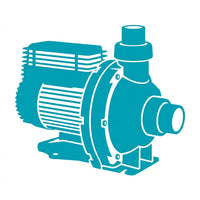
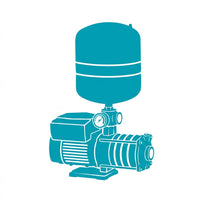
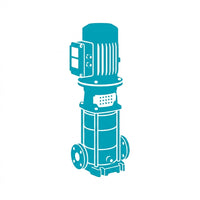
That is why pressure pump selection should always be tied to use case. A compact automatic pump may suit a small home or tank supply, while a larger multistage or horizontal pressure system may be the better fit for higher demand, longer pipe runs or multiple simultaneous outlets.
Work out your required flow rate
Flow rate is the amount of water you need the pump to deliver, usually measured in litres per minute. This is one of the most practical ways to narrow down options.
If the pump is supplying a house, think about how many fixtures might run at once. A shower, kitchen tap and toilet refill can overlap. Add garden watering or washing machine use, and demand climbs quickly. For irrigation, count the number of sprinklers or zones operating at the same time and the flow each outlet requires.
The key point is simultaneous demand. You do not size a pressure pump around every outlet on the property running at once, but you also should not size it around a single tap if the site regularly uses more than that. A realistic peak demand gives you a much better result.
Understand the pressure you actually need
Pressure is usually discussed in kPa or bar, and it needs to be enough to perform well at the point of use. Good pressure at the pump does not always mean good pressure at the outlet, because you lose pressure through pipe length, bends, valves, filters and elevation.
If water has to travel uphill from the pump to the building or across a long site, the pump must overcome that extra resistance. This is where total head becomes important. In simple terms, total head combines vertical lift and friction loss through the system.
For a single-storey home, the required pressure may be modest. For a two-storey building, long rural run or irrigation setup, the pump may need significantly more head to maintain performance. This is why two pumps with the same motor size can perform very differently in the field.
Match the pump to the water source
Not every pressure pump is suited to every water source. Before choosing a model, check where the water is coming from and how the pump will draw it.
If you are pumping from a rainwater tank located close to the pump, suction conditions are usually manageable. If the water source is below the pump, a surface-mounted self-priming pump may be suitable within practical suction lift limits. If the source is deep underground, you are generally looking at a bore pump or submersible arrangement rather than a standard pressure pump.
Water quality matters too. Clean tank or mains backup water is different from dam water, bore water or water carrying sediment. If the water contains sand, debris or higher mineral content, that can affect pump material selection, seal life and the need for filtration. A pump that looks right on paper can have a short service life if the water quality is ignored.
Choose the right control system
Modern pressure pumps often include automatic controllers, pressure switches or integrated variable speed controls. The control method has a direct impact on how the pump behaves in day-to-day use.
A basic automatic pressure controller is common for domestic systems. It starts the pump when pressure drops and stops it when flow ends. It is simple and effective for many applications. The trade-off is that on variable demand systems, pressure can fluctuate more than with a higher-end controller.
A pressure tank and switch arrangement can reduce cycling and smooth operation. Variable speed systems go a step further by adjusting motor speed to maintain more consistent pressure as demand changes. They can be excellent where comfort and pressure stability matter, but they are not always necessary for simpler jobs and usually come at a higher upfront cost.
How to choose pressure pump size without oversizing
Oversizing is one of the most common and expensive errors. Bigger is not automatically better. An oversized pressure pump can cycle on and off too frequently, create noise issues and place unnecessary stress on pipework and fittings.
The better approach is to select a pump that covers your required duty point - the flow and pressure you need at the same time - with a sensible margin, not a huge one. This is where pump curves matter. A pump curve shows how much flow a pump can deliver at different heads. If your duty point sits in the efficient operating range of the curve, you are generally in the right area.
If your required duty sits right at the edge of the curve, the pump may struggle in real conditions. If it sits far below the curve, the pump may be oversized. Selection is about balance. You want reliable performance with some headroom for normal variation, but not so much that the system becomes inefficient.
Consider installation conditions and noise
Pressure pump performance is affected by more than the spec sheet. Installation conditions can make or break the result.
Check whether the pump will be mounted outdoors, under a house, in a plant room or near occupied areas. Noise can be a serious issue in residential and light commercial settings. Some pumps are quieter by design, and mounting method also matters. A solid base, proper pipe support and flexible connections can reduce vibration and noise transfer.
You should also consider weather exposure, ventilation and access for maintenance. A pump tucked into an awkward corner might fit on install day but become a headache when it needs servicing, priming or inspection later on.
Think beyond purchase price
It is easy to compare pumps on price alone, especially online, but the cheapest option is not always the lowest-cost option over time. Reliability, spare parts availability, service support and brand track record all matter.
For trade buyers and property owners, downtime usually costs more than the difference between entry-level and proven equipment. A pump from an established manufacturer with solid local support can be the safer decision, particularly where the system is critical to water supply or operations. Brands such as Grundfos, Davey, Lowara, Onga, Pedrollo and Ebara are commonly chosen because support, performance data and replacement parts are easier to back with confidence.
This is also where specialist advice has real value. A supplier that can help with sizing, accessories, setup and after-sales support is often worth more than a slightly lower ticket price from a general retailer.
Common mistakes to avoid
Most poor outcomes come back to a few predictable issues. The pump is selected on motor size instead of duty, friction loss is ignored, or the installer assumes any automatic pressure pump will suit any tank setup.
Another common mistake is forgetting the rest of the system. Pipe diameter, check valves, filtration, inlet conditions and electrical supply all affect how well the pump performs. If one part of the setup is wrong, even a quality pump can appear to be the problem.
Where the application is not straightforward, it pays to confirm the duty before buying. That is especially true for long pipe runs, mixed water sources, poor suction conditions or systems serving multiple buildings.
A good pressure pump should disappear into the background. It should start when needed, hold pressure properly and keep operating without constant adjustment. If you are unsure how to choose pressure pump equipment for your site, the safest move is to size it around the actual job, not the guesswork. Get the application right first, and the pump choice becomes much clearer.
If you want a system that lasts, think like an operator rather than a shopper - choose the pump you will not need to second-guess six months from now.